Some evenings need a plan. A relaxed one needs a light plan — just enough structure that nobody spends the first hour deciding where to sit and the last hour hunting for the bill. A lounge evening works best when the logistics disappear early and the conversation takes over. What follows is the practical version: how to book, when to arrive, where to sit, what to order, and how to keep the whole thing from quietly turning into a schedule.
Book Ahead, and Be Specific When You Do
A lounge is a different beast from a restaurant. Tables are held longer, turn over more slowly, and the difference between a good seat and a great one is often decided before you arrive. Book three to five days ahead for a Thursday or Friday, a week or more for a Saturday. If your evening is a birthday, an anniversary or a first meeting, say so — it helps the team place you somewhere that suits the mood rather than the nearest free table.
When you book, ask two questions that most guests forget. First: how long is the table yours? Some lounges run in sittings, others let a table run all evening. Knowing which one you have changes how you pace everything else. Second: when does the kitchen stop taking orders? A lounge can stay open for hours after the last plate leaves, and it is far more pleasant to know the timing in advance than to discover it at the moment you wanted one more small plate.
Give an honest number. A party of six that becomes nine is a problem for everyone, including you. If your guest list is still moving, book for the number you are confident about and call the day before to adjust.
Arrival Timing: Aim for Slightly Early, Not Perfectly On Time
Arriving ten minutes early is close to ideal. It gives you time to hand over a coat, settle, and look at the room before the evening properly starts. Arriving thirty minutes early is usually awkward — the space may still be finding its rhythm, and you will spend the first round watching staff set up around you.
Build a buffer into your travel instead. City traffic, a missed train, the search for parking: one of these will happen. If you are running more than fifteen minutes late, call. A quiet word ahead of time is always better than an apologetic arrival at a table that has already been given away.
One more thing worth deciding before you leave the house: who is arriving first. Someone should be there to hold the table and greet the rest. A group that trickles in over forty minutes never quite settles.
Choosing the Right Seat for the Evening You Want
Seating is the single most underrated decision of the night. Ask for what you actually want rather than accepting the first table offered — a good host would rather move you at seven o'clock than watch you lean in over a speaker at nine.
The corner banquette, for conversation
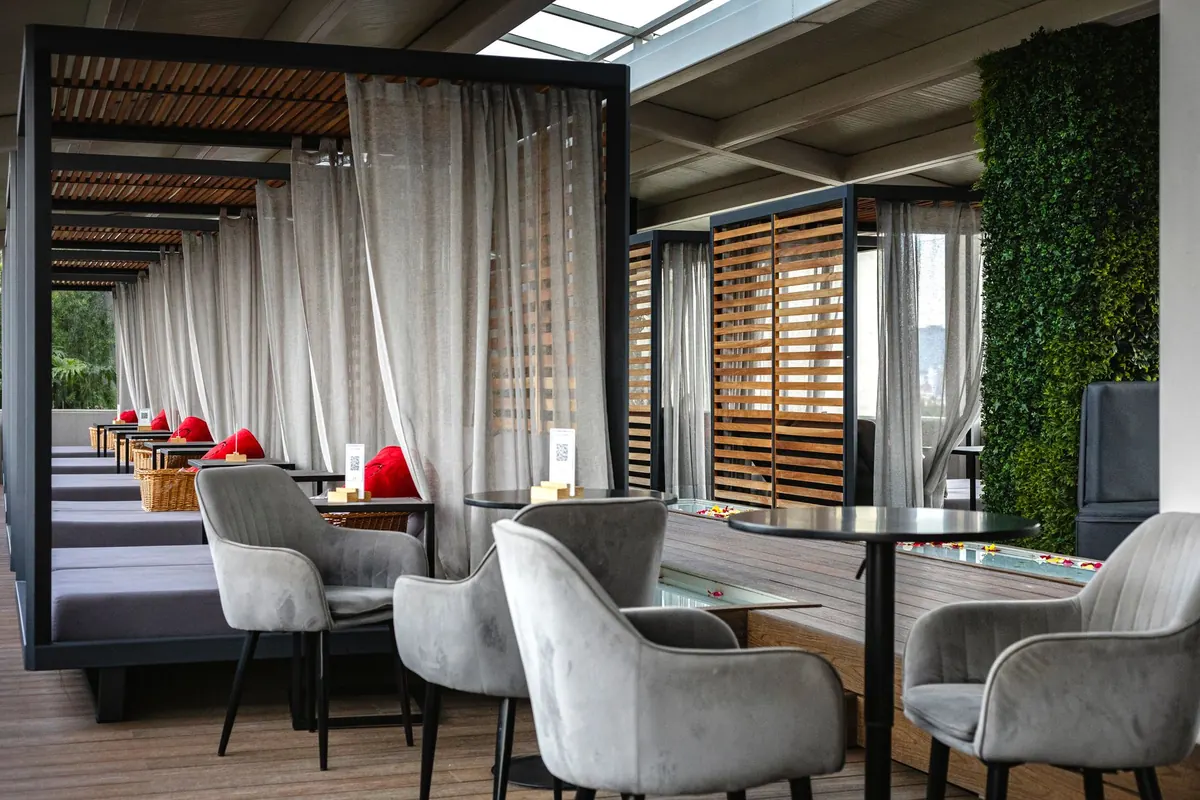
Corner seats with a wall behind them are the best choice for a small group that intends to talk. The acoustics are softer, nobody is walking past your shoulder, and the shape of the table pulls people inward. If you are catching up with one or two people, this is the seat to ask for.
The window, for atmosphere
Window tables give you the room and the street both at once, which suits a first date, a slow evening with a book, or anyone who likes a little theatre with their drink. They are also the most requested seats in any lounge, so mention it when you book rather than when you arrive.
The bar counter, for flexibility
Sitting at the bar is not a consolation prize. You get the bartender's attention, a live view of the room, and the freedom to leave whenever the mood takes you. It is the best seat in the house for two people who have not decided how long they are staying.
Whatever you choose, check three things before you commit: distance from the music, whether the air conditioning blows directly on you, and whether there is a chair with a back for whoever needs one. All three are easy to fix at the start of the evening and impossible to ignore by the end.
Building a Drink Order That Lasts the Evening
The most common mistake is ordering in a burst — two rounds in the first hour, then a long gap while everyone waits for someone to take charge. A relaxed evening has a rhythm, and the drinks should follow it rather than set it.
- Open with something long and low in alcohol. A spritz, a highball, a light beer, a vermouth with soda. It buys you time and keeps the first hour clear-headed.
- Move to something slower for the middle. A glass of wine, a stirred cocktail, a spirit you actually want to taste. This is the part of the evening where people talk properly.
- Keep water on the table from the start. Not as a rule, as a habit. It stretches the evening and makes the next morning friendlier.
- Order in rounds, not in bulk. Two drinks each arriving at once go warm and flat. Order as you finish and let the pace breathe.
- Ask the bartender what they enjoy making. A genuine question gets a genuine answer, and often a better drink than the one on the menu.
If you are not drinking, say so plainly and ask what the non-alcoholic options are beyond the obvious. Any decent lounge will have something worth ordering, and a good bartender will treat it as a proper request rather than a subtraction.
How to Keep the Evening Unhurried
Pace is a shared responsibility. Staff read the table constantly — how full the glasses are, whether menus are closed, whether anyone is looking around for something. Give them the right signals and the evening will stretch.
- Say it out loud at the start: "We are in no rush." Two seconds of information that changes how the whole table is served.
- Do not let plates and glasses stack up. Ask for them to be cleared as you go; a clean table resets the mood and makes room for the next thing.
- Decide on food before the second round, not after the third. Hunger makes people order badly and eat too fast.
- Put the phone face down. Not away — face down. It is enough.
- Resist the urge to plan the next stop while you are still in this one. The best lounge evenings end because people are tired and happy, not because a reservation elsewhere is calling.
And when you are ready to leave, ask for the bill rather than waiting to be offered it. Paying does not end an evening; hunting for someone to take your card does.
Food: Small, Shared, Spread Out
Lounge food works best when it is ordered in waves rather than all at once. Two or three small plates to begin, more later if the evening is going that way. Sharing is the natural default, but do ask about portions before you assume — what looks like a board for four is sometimes a plate for two.
Leave room for something at the end. A dessert, a coffee, a last small bite, depending on the hour. It gives the evening a soft landing instead of an abrupt one, and it is usually the part people remember.
The Short Version
Book a few days ahead and ask how long the table is yours. Arrive ten minutes early, call if you are late, and make sure one person is there first. Choose your seat by purpose: corner for conversation, window for atmosphere, bar for flexibility. Open with something long, slow down in the middle, and keep water in reach. Tell your host you are in no rush, order food as you go, and ask for the bill when you want it rather than when it is offered.
None of this is complicated, and none of it should be visible on the night. The point of a light plan is that it removes the small frictions — the uncertain booking, the awkward wait, the wrong table, the rushed last round — so that what is left is a few unhurried hours in good company. That is the whole ambition.
Photo: MART PRODUCTION / Pexels