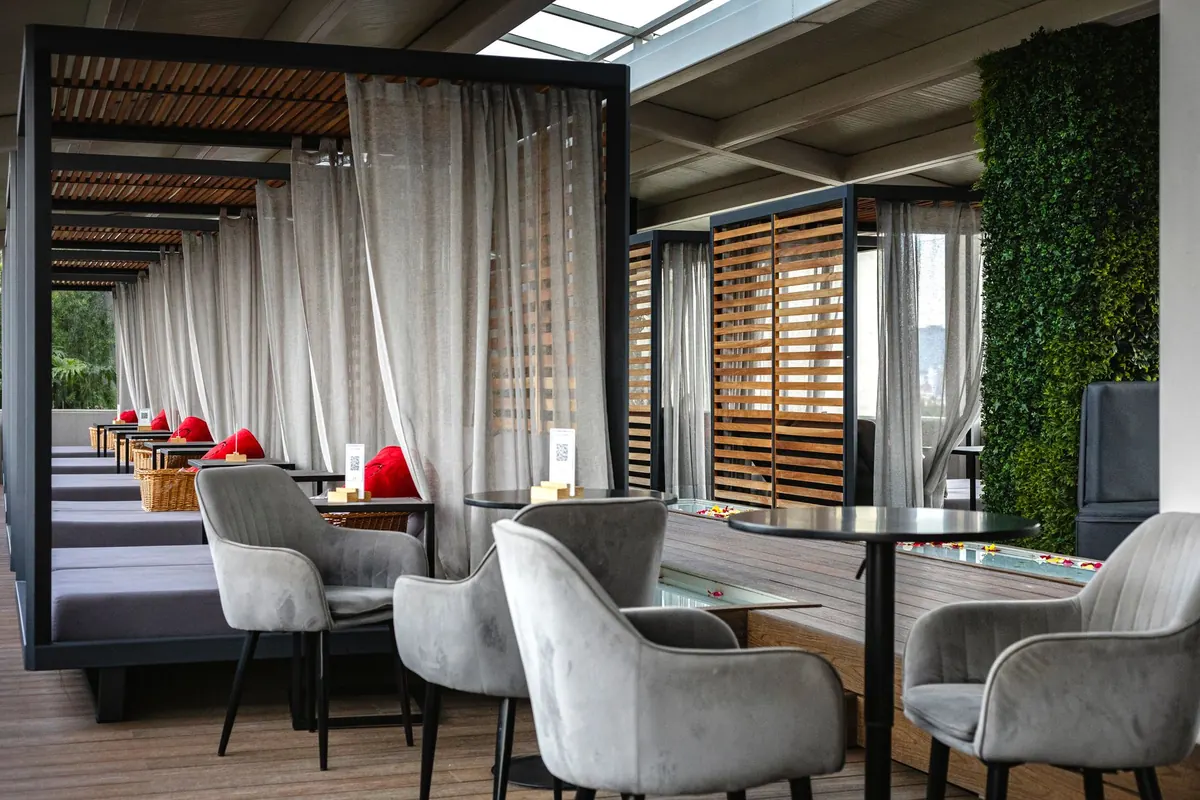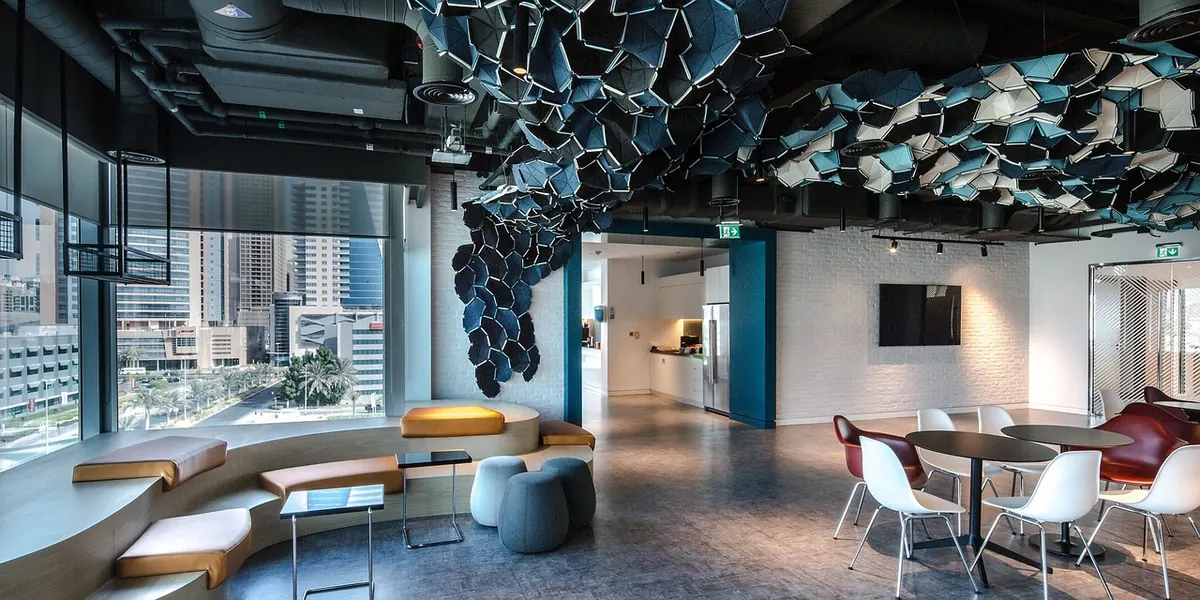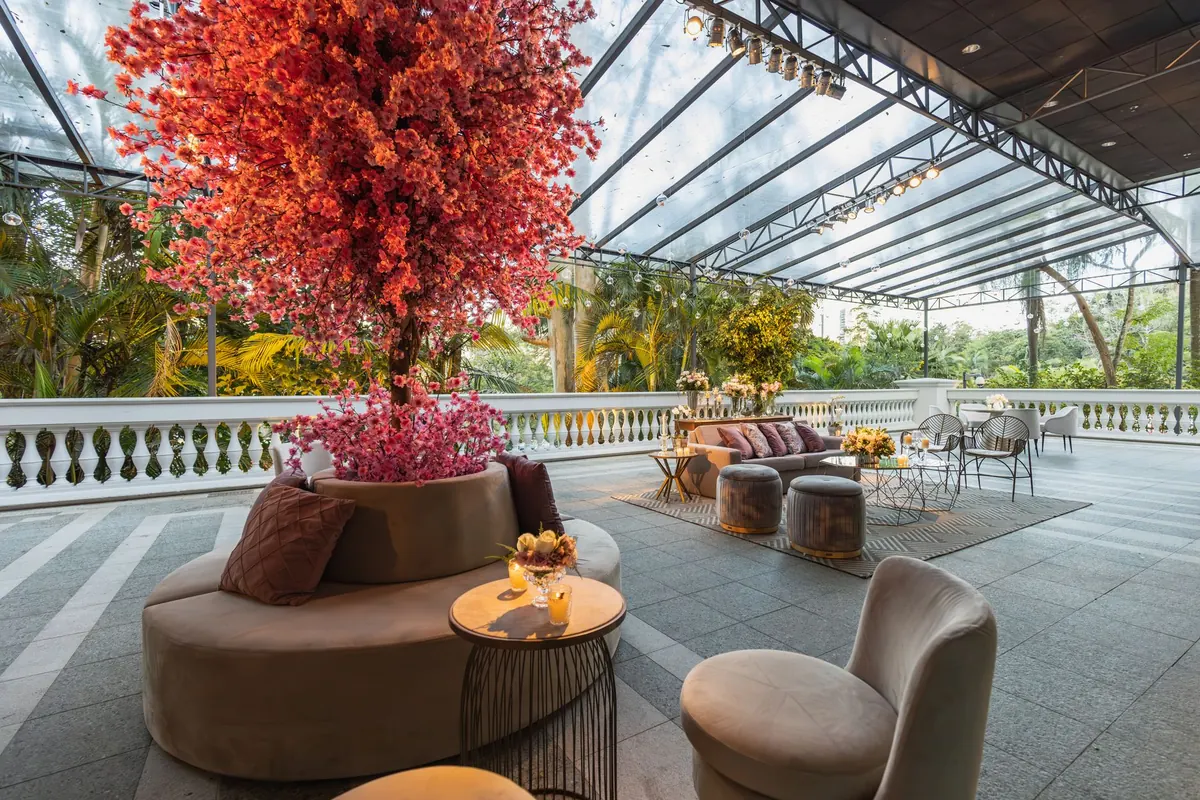
Two visits to the same lounge can feel like two different rooms. In July the terrace is the whole point: shutters half closed, ice sweating on the table, everyone angling for the seat that catches the evening breeze. In January that same terrace is a strip of grey light, and the interior pulls you in — low lamps, warm wood, the small clink of a spoon against a saucer. The furniture barely moves between seasons. The way you use it changes completely.
What follows is a working guide to those differences: where to sit, what to order, and when to arrive, whether you come in a linen shirt or a wool coat.
Summer Seating: Shade First, View Second
On a hot afternoon, the difference between a good table and a bad one is rarely the view. It is the shade. Sun moves across a terrace faster than most people expect: a table that is comfortably shadowed at five can be in full glare by seven, and the corner that looks gloomy when you arrive may be the best seat in the house an hour later.
Read the Sun Before You Choose
Look at the walls and the roofline before you sit down. A deep overhang, a pergola, the north face of a stone building — these hold their shade for hours. A parasol only works while the sun is high, and it does nothing about heat rising from the paving. Stone and terracotta hold warmth well into the night, which is pleasant at nine and less so at six.
Ask whoever seats you which side stays shaded through the evening. They watch the light shift every day and will know. For four or more, take the long table under the overhang rather than pushing small tables together at the terrace edge; you will get more air and fewer people squeezing past with trays. For two, the outer corners are worth the extra steps — a wall at your back, a breeze on your face, and nothing between you and the street but a railing.
What to Drink When the Terrace Is Hot
Heat changes what a drink needs to do. Aperitivo hour calls for something long, cold, and low enough in alcohol that a second one still leaves you clear-headed for dinner. Spritzes, highballs, vermouth over ice with a strip of orange, a bottle of white wine that arrives in an ice bucket rather than a glass — all of these work because they are served properly cold and stay that way.
- Order ice on the side if you drink slowly. A drink that sits for twenty minutes becomes watery; a glass of ice lets you control the dilution.
- Ask for sparkling water alongside. It slows the pace without making the table feel like a meeting.
- Choose a lower-alcohol pour for the first round. You can always go stronger later, but a strong start in thirty-degree heat rarely ends well.
- Eat something salty. Olives, almonds, a plate of something cured — small bites make a long terrace session comfortable.
Summer Timing: The Long Middle Evening
Between two and four in the afternoon the terrace is at its emptiest and its hottest. If you want quiet, that is your window, but sit inside with the shutters angled and the air moving. The real season starts around seven, peaks between eight and half past nine, and then loosens again as the light goes and a breeze arrives from somewhere.
Remember that sunset moves. A terrace that is unbearable at six in June is lovely at eight in late August, when the light leaves earlier and the stone has stopped radiating. For groups, book anything after half past seven; walk-ins work best before seven or after ten.
The best seat in July is rarely the best seat in January. Look at the light before you look at the menu.
Winter Seating: The Room Does the Work
Cold weather reverses the logic. The terrace becomes a place to stand for thirty seconds and reconsider, and the interior has to earn its keep. Your first job is to get away from the door — not three steps away, but properly away, past the draught that arrives with every guest. Banquettes along a wall are warmer than freestanding chairs, and a corner seat gives you two walls instead of one.
Seats to Avoid Indoors
- Directly under a heat lamp or beside a radiator. Warmth from above dries the air and your throat; you will be too hot within twenty minutes.
- The route between bar and floor. It looks lively. It is also a constant stream of movement and cold air.
- The table with nowhere to put a coat. If your coat ends up on the floor or on your lap, you will leave earlier than you meant to.
Then think about light. Winter afternoons fade early, and the difference between a table under a low lamp and one in the middle of the room is the difference between staying for a second drink and calling it a night.
Cold-Weather Drinking: Depth, Warmth, and Pace
Winter drinks are shorter, stronger, and slower. Stirred cocktails — a negroni, a manhattan, something with amaro — suit the season because they are sipped rather than gulped. A glass of red with a little weight to it does the same job. Warm drinks are pleasant as an opener or a nightcap, though they tend to be sweet; one is usually enough.
Pace matters more than the drink itself. A short cocktail at six, a glass of wine with food, and a coffee at the end is a fine evening. Three short cocktails before dinner is a short evening. Alternate with water, order something to eat, and if you are driving or on medication, ask for the non-alcoholic version — most bars make a good one now. For anything beyond that, your doctor is the right person to ask, not a bartender.
Winter Timing: Earlier, Shorter, Warmer
In winter, daylight becomes the appointment. Arriving at five gives you a bright room and a calm bar; arriving at eight gives you a warm, crowded one. Lunch at the weekend is the underrated slot: the light is at its best, the room is unhurried, and you can walk home before the cold settles in.
Evenings start earlier and finish earlier. The after-work rush is real from six to half past seven, and the room quiets noticeably after ten, when the espresso machine goes on and the last tables linger. Early in the week is calmer than Friday and Saturday, which is worth knowing if you want the corner banquette without waiting.
A Short Practical Guide for Either Season
None of this requires much planning. It requires noticing a few things before you commit to a chair.
- Glance at the sky and the roofline before choosing a table; shade and warmth are decided by the building, not the furniture.
- Ask where the sun will be in an hour, and where the draught comes from.
- Match the drink to the temperature: long and cold in summer, short and slow in winter.
- Keep water on the table in both seasons.
- Arrive early for quiet, late for atmosphere, and book if there are more than four of you.
- Tell the staff what you actually want — a breeze, a corner, no music nearby — and they will usually find it.
The lounge is the same room all year. What changes is how you read it, and a good seat is mostly a matter of looking before you sit.
Photo: Matheus Bertelli / Pexels