A business meeting can survive mediocre coffee. It rarely survives a room where nobody can hear the person across the table.
Most people book a lounge the way they book a restaurant: they look at photos, read a review or two, and pick the place that looks calm and well-lit. Then they arrive to find a espresso grinder running beside their table, a speaker directly overhead, and a waiter who wants to take the lunch order before anyone has opened a laptop.
The fix is not to find a rarer kind of lounge. It is to ask better questions before you commit. What follows is the checklist I would use for any meeting that matters — a client lunch, a small negotiation, a catch-up with someone you only see twice a year. None of it is complicated. All of it needs to happen before the day, not during it.
Start with the room's sound, not its photographs
"Is it quiet?" is a useless question, because every venue will say yes. Ask instead what the room is made of and what sits next to it.
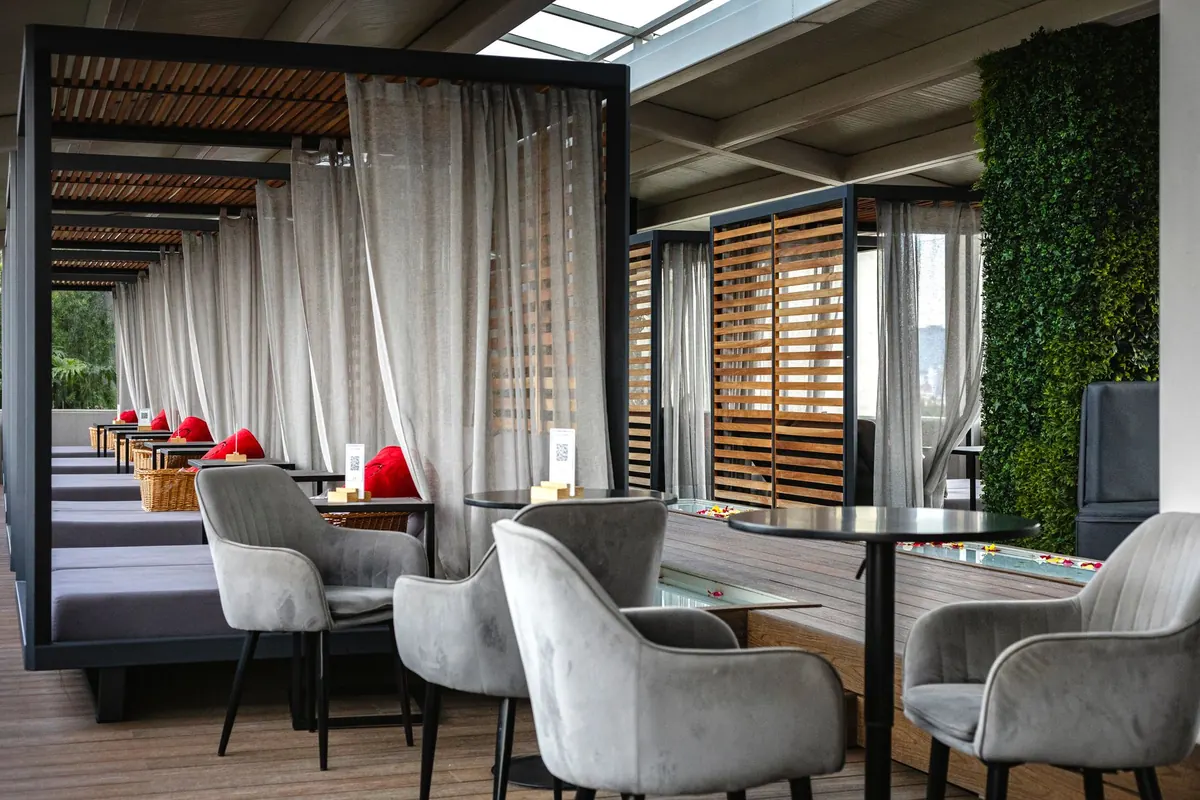
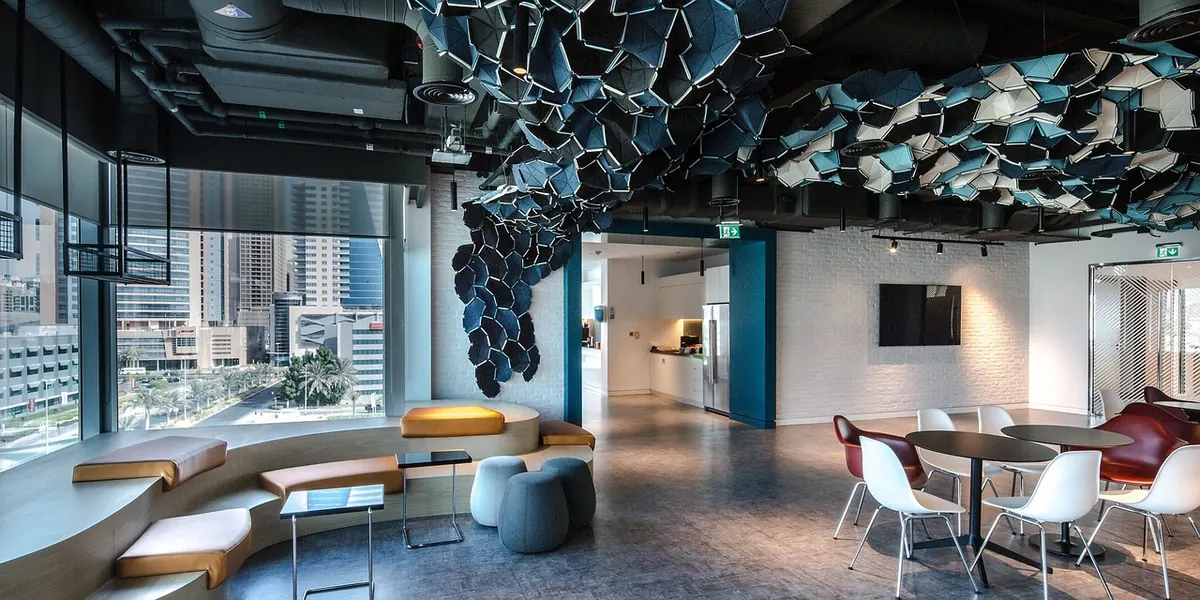
Hard floors, high ceilings and large glass walls reflect noise; heavy curtains, upholstered banquettes and rugs absorb it. A lounge with soft surfaces can absorb forty people and still feel calm. A marble-floored one can feel loud with eight.
Then ask what is directly adjacent: the kitchen pass, the coffee machine, the service station where staff stack plates, the main entrance door that swings open onto the street, or a bar with a speaker above it. Any of those within a few metres of your table will shape the conversation more than the decor will.
Two practical moves:
- Call the venue at the hour your meeting will start and listen to the background. You will hear the espresso machine, the music level and the general hum honestly, without a marketing filter.
- Ask whether the music can be turned down or off in your area. A lounge that says yes without hesitation is a lounge that has hosted meetings before.
Test the Wi-Fi before you trust it
Free Wi-Fi is not the same as working Wi-Fi. If anyone in the meeting needs to open a file, share a screen or join a call, the connection is part of the booking.
Ask what the guest network is like at the time of day you need it, whether it is shared with the whole venue, and whether it reaches the corner table you have in mind rather than just the bar. Thick walls and basement rooms are where hotel and lounge connections usually fail — and where mobile signal often fails with them.
On arrival, run a quick test before anyone else sits down: open a heavy website, send a file, start a short video call. If it stumbles, switch to a phone hotspot and tell your guests which network to use. It is worth carrying a small power strip too; a table with one accessible socket is a table where two laptops will compete for it.
Seating decides the shape of the conversation
Look at the chairs, not the cushions. Deep armchairs and bar stools are comfortable for twenty minutes and awkward for ninety, especially if anyone needs a laptop, a notebook or a document spread out. You want upright chairs at a table height that lets people write without hunching.
Round tables soften a meeting and make it easier for four or five people to all take part. Rectangular tables are better when someone is presenting or when there are documents to share. In either case, ask whether the table can be moved, and ask for the seat with a wall behind it for whoever is leading the discussion — it removes the distraction of traffic passing behind them.
Good seating does not make a meeting good. Bad seating quietly guarantees it will be harder than it needs to be.
Three seating details worth confirming
- Distance from the main walkway, so servers and guests are not brushing past the table.
- Space for a laptop, a folder and a glass of water without rearranging everything.
- Whether the area can be reserved rather than simply requested.
Privacy is a distance, not a word
Every lounge has a "private corner". Sometimes it means a screened alcove away from the room; sometimes it means a table by the toilets. Ask what separates the space from the rest of the floor, and how many other tables sit within earshot.
For anything sensitive — a salary conversation, a contract detail, a difficult piece of feedback — sit with your back to the room and your screen angled away from passers-by. Keep documents face down when you step away. If the discussion genuinely cannot be overheard, book a space that can be closed or reserved exclusively; a lounge is a good setting for a meeting, but it is not a boardroom, and pretending otherwise creates its own risks.
Solve the arrival before you solve the agenda
People arrive stressed when parking is unclear. A meeting that begins with a guest circling the block for ten minutes begins badly, no matter how good the coffee is.
Confirm whether parking is on site, in a nearby garage or on the street, and roughly how long the walk takes from car to door. Ask about the entrance itself: is it on a side street, behind a courtyard, up a flight of stairs? If your guest has never been, send two lines the day before with the entrance description and where to park. It takes a minute and removes most of the friction from the first handshake.
Service pace: attentive, not present
The best business service in a lounge is nearly invisible. Water appears. Orders are taken once, correctly. Nobody interrupts a sentence to ask how everything is.
Ask a few direct questions when booking: can the order be taken at the start so the table is not disturbed mid-conversation? Can the bill be brought at a set time, or left until you ask? Can it be split, or invoiced to a company? A venue that handles these smoothly is telling you something about how it handles everything else.
Also ask how long the table is yours. A lounge that quietly expects a two-hour turnover is fine for a coffee and wrong for a working session. Say what you need, and get it agreed in advance.
A five-minute checklist before you book
- Sound: soft surfaces, no speaker overhead, nothing loud next door.
- Connection: working Wi-Fi at your table, mobile signal, a socket within reach.
- Seating: upright chairs, proper table height, room for papers and laptops.
- Privacy: distance from the bar and the door, screens if needed, screens away from passers-by.
- Arrival: parking confirmed, entrance described, walking time known.
- Pace: order taken early, bill on request, table held for the length of the meeting.
Confirm the details that ruin meetings
Two days before, call and confirm the table, the time, the number of people and the quiet corner you were promised. Ask again about the music and the Wi-Fi. Day-of confirmations feel fussy; they are simply cheaper than recovering a meeting that started wrong.
Then arrive fifteen minutes early. Sit down. Listen. Test the connection. Check where the sun falls and whether the table is genuinely the one you discussed. Fifteen minutes of preparation buys you an hour of conversation that belongs to the people in the room rather than to the room itself.
Photo: MagicDesk / Pixabay